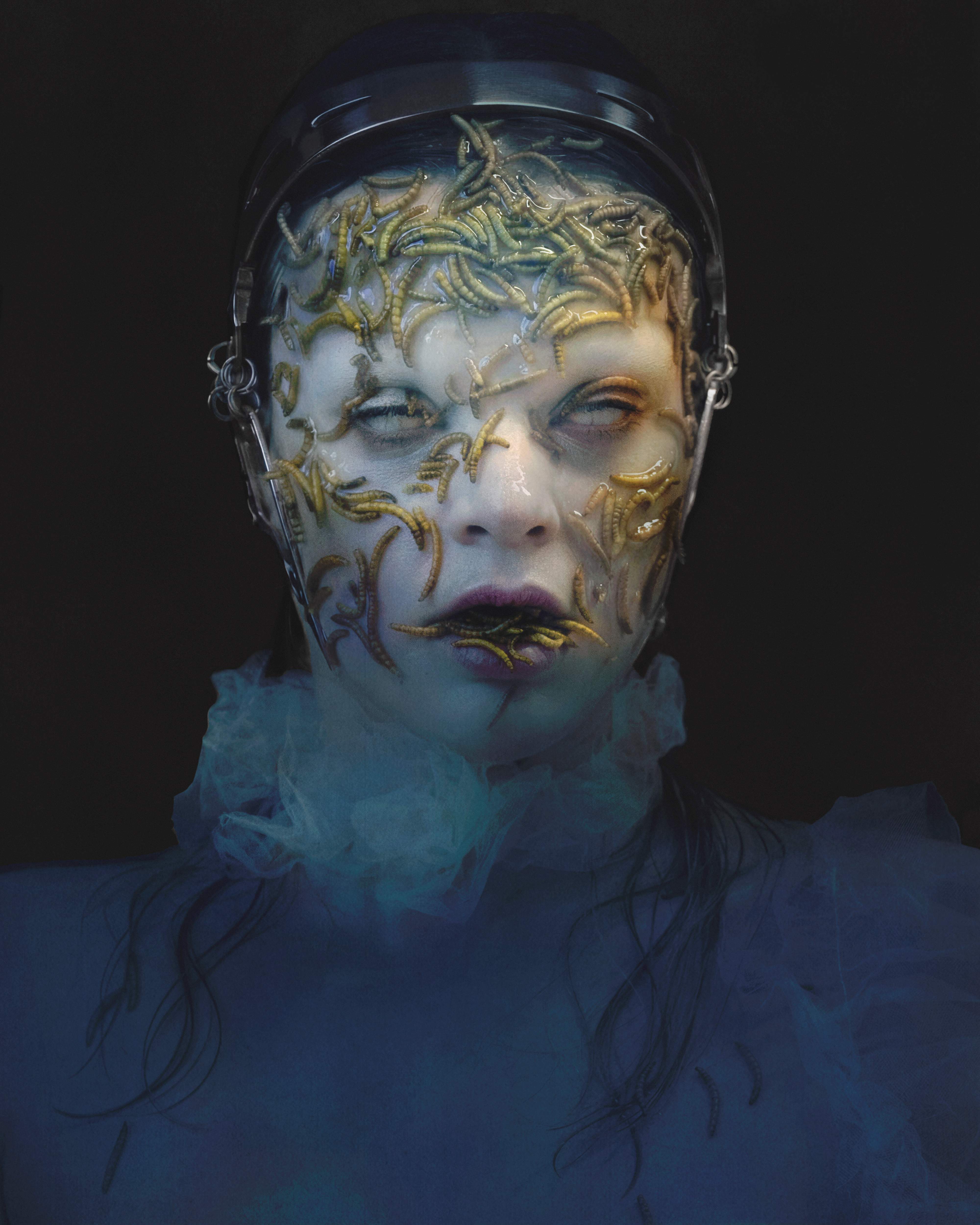
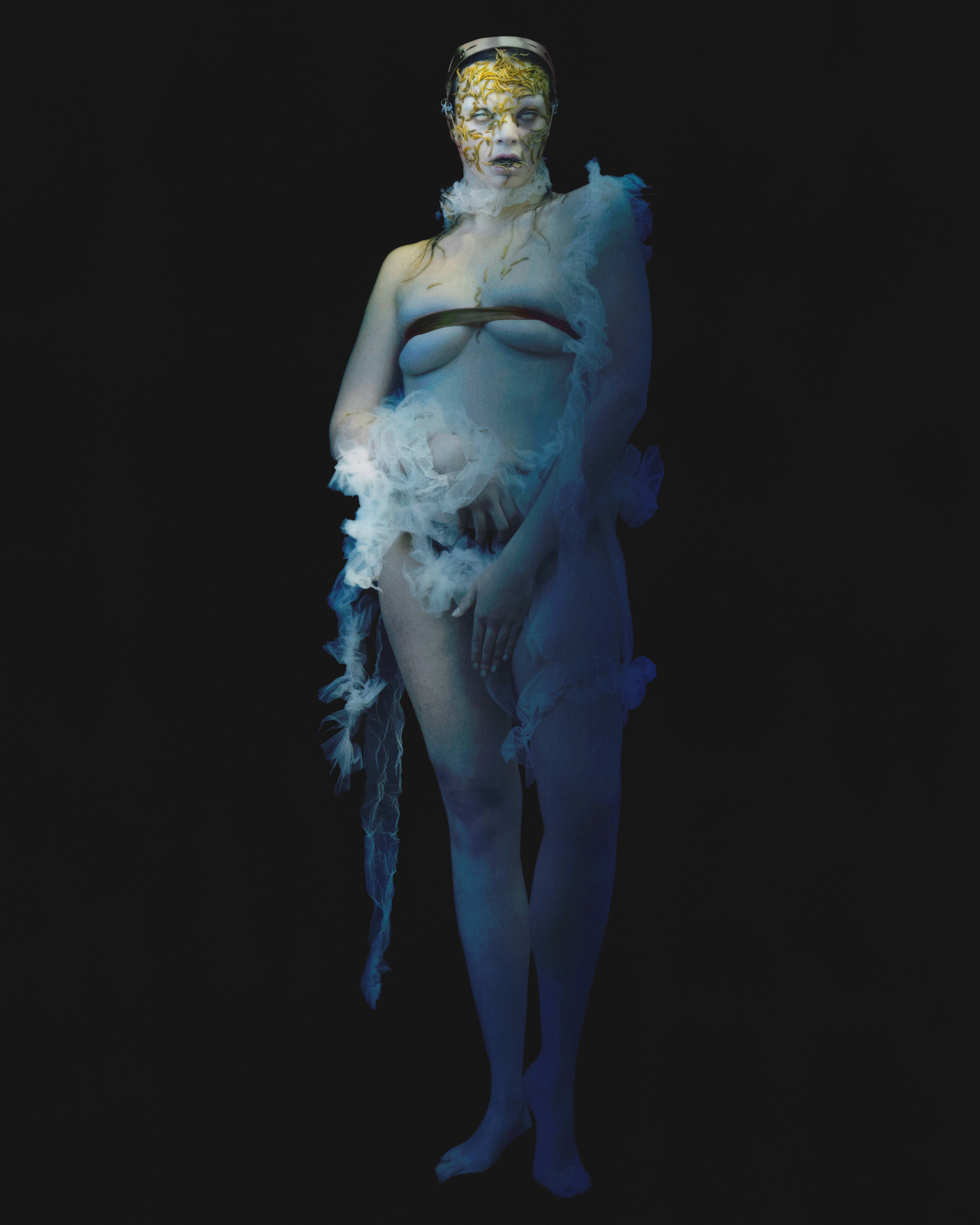
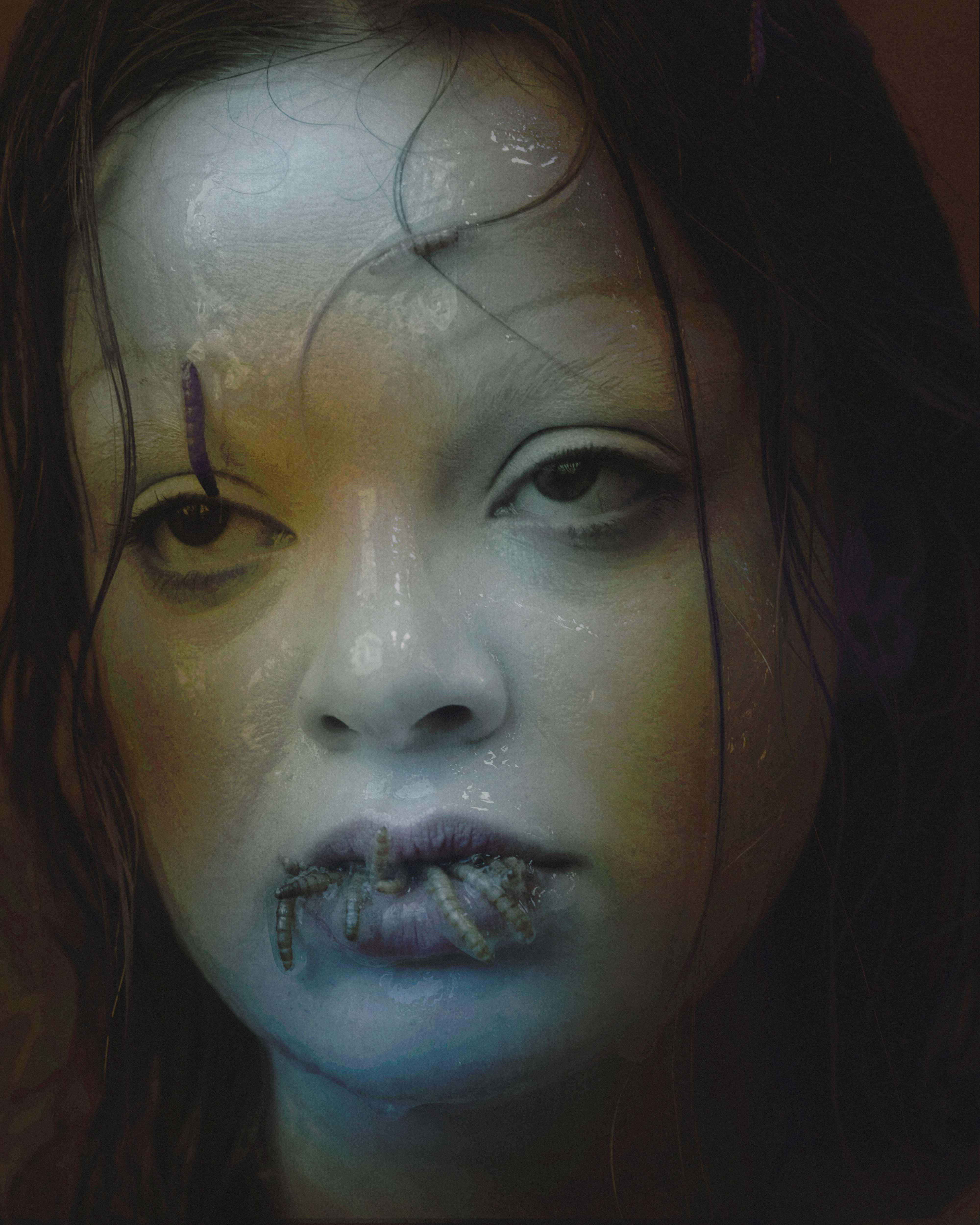
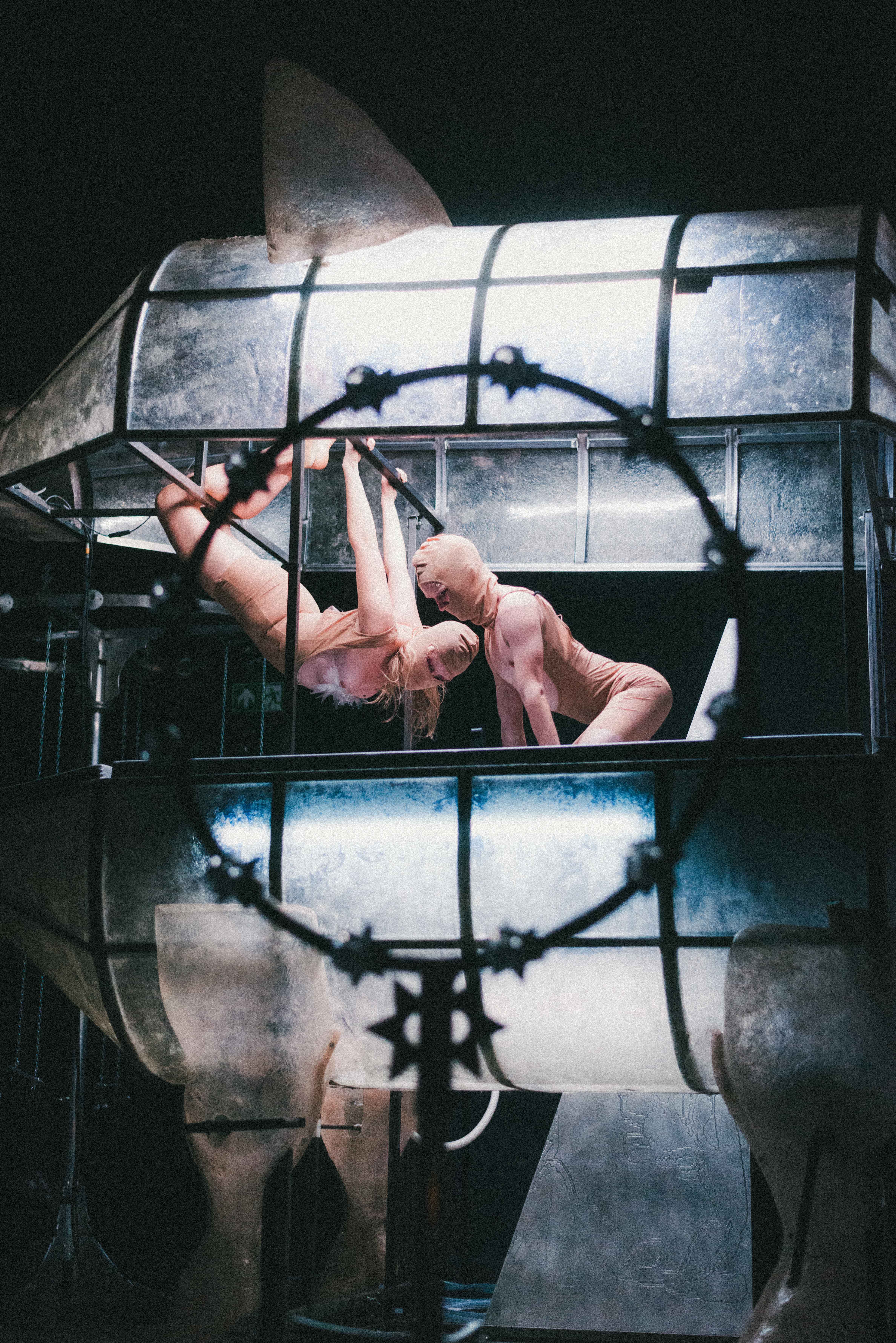
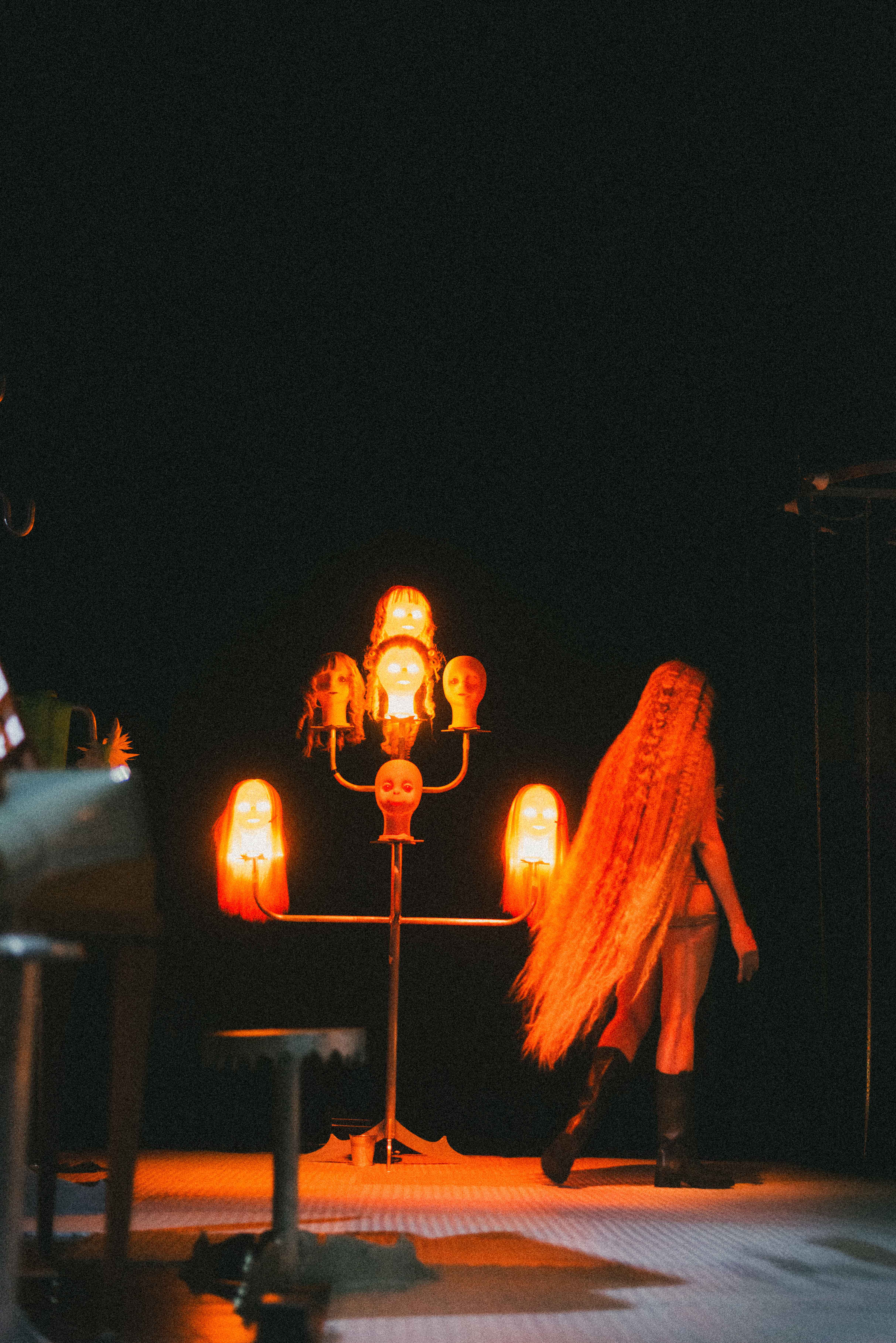
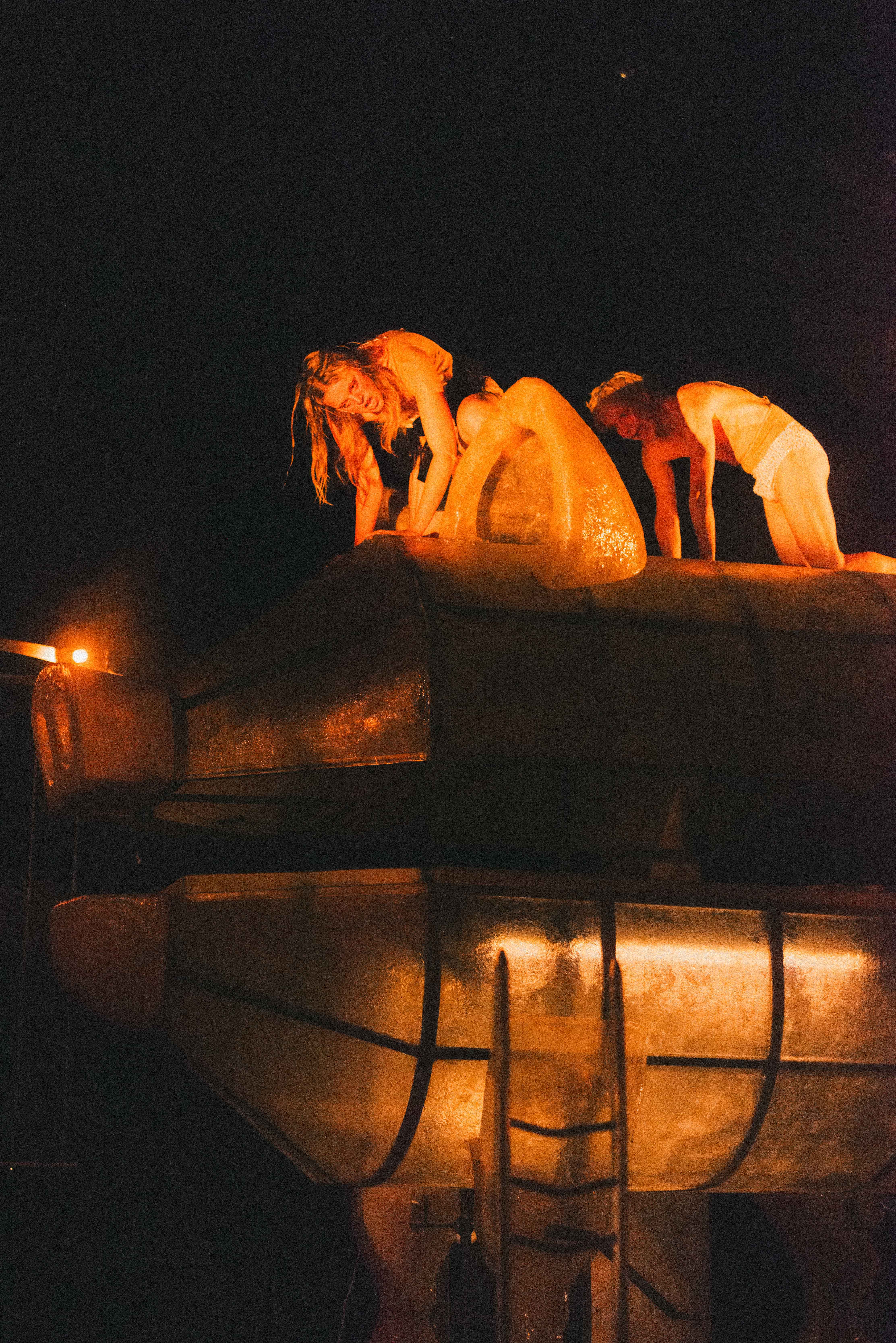
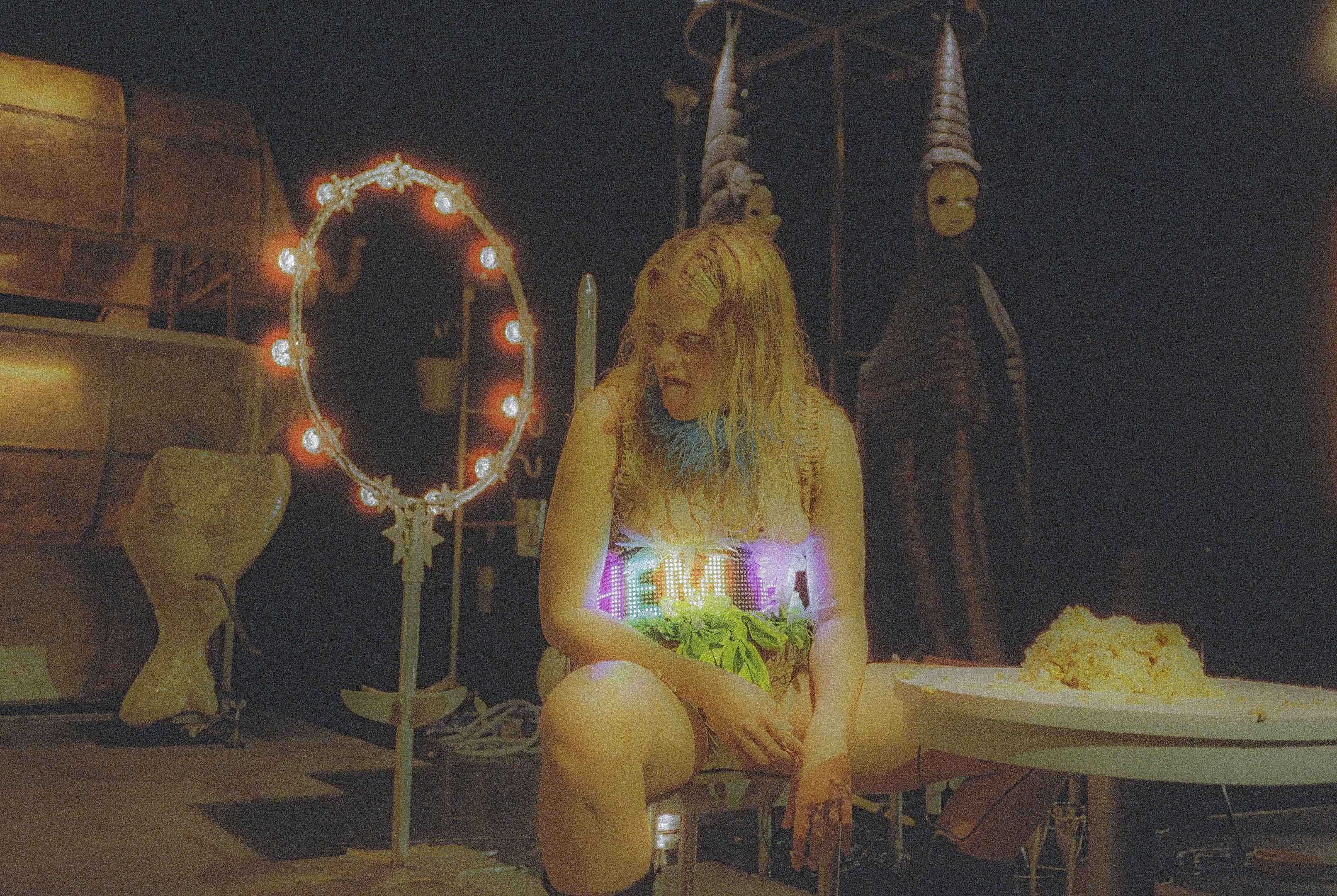
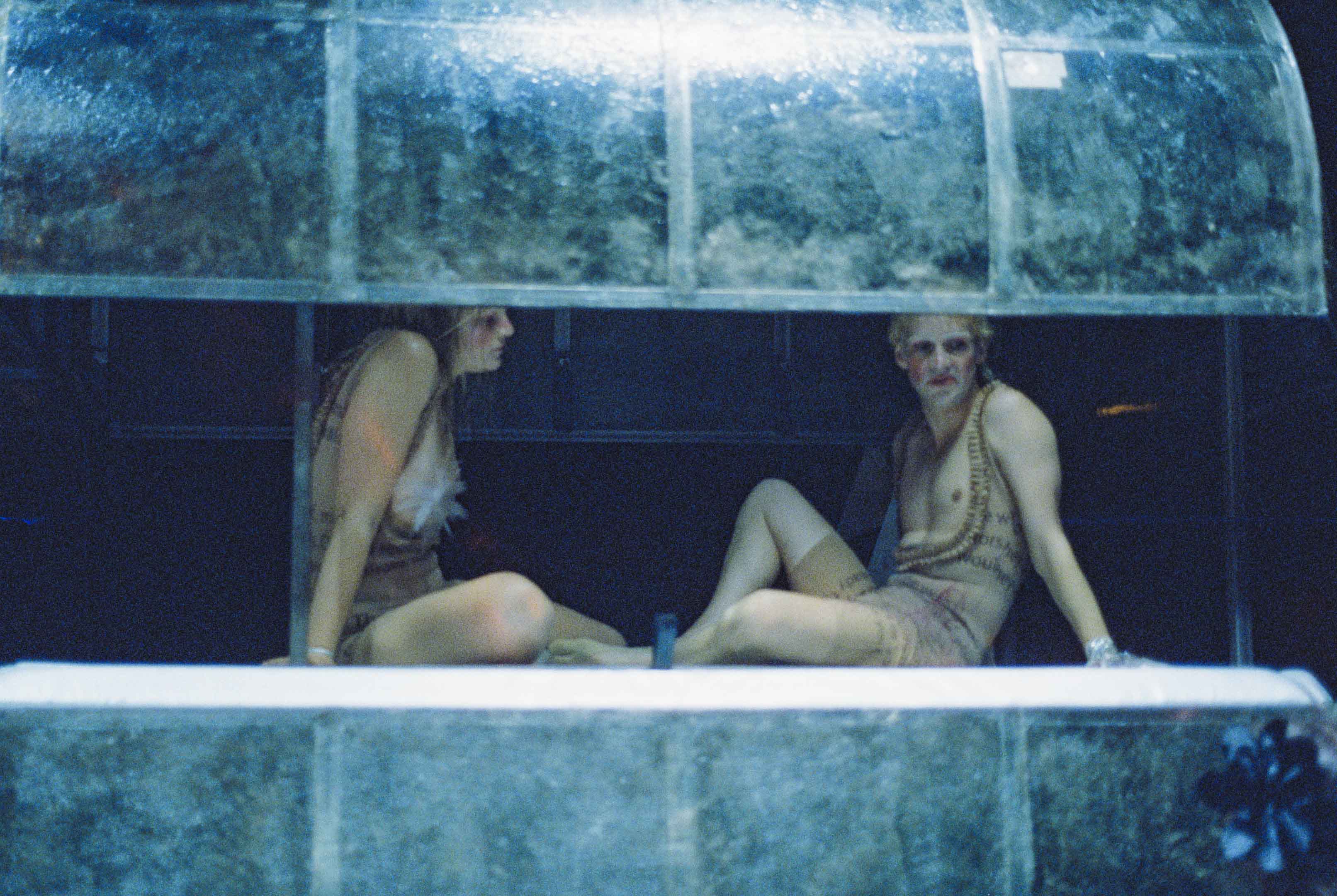
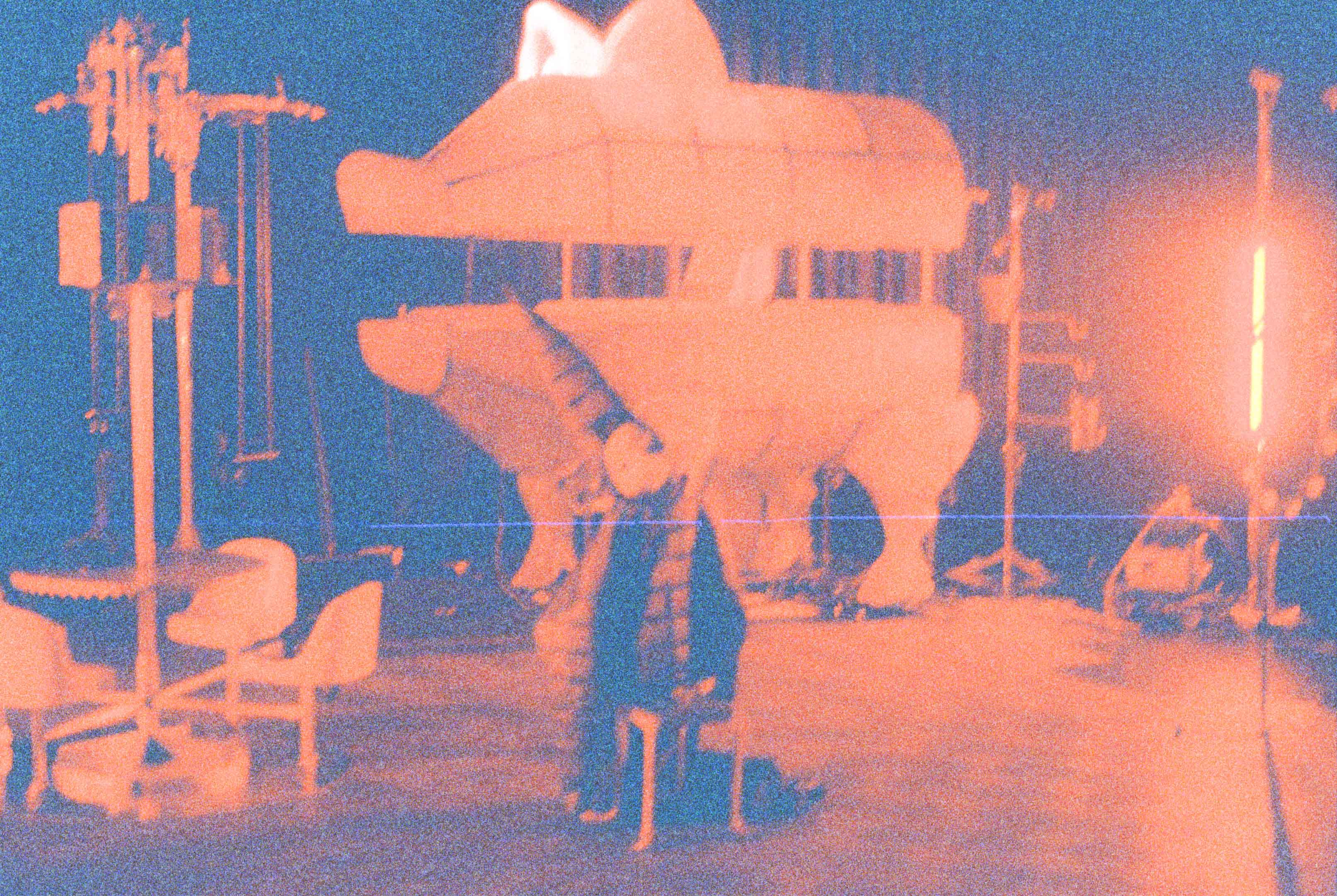
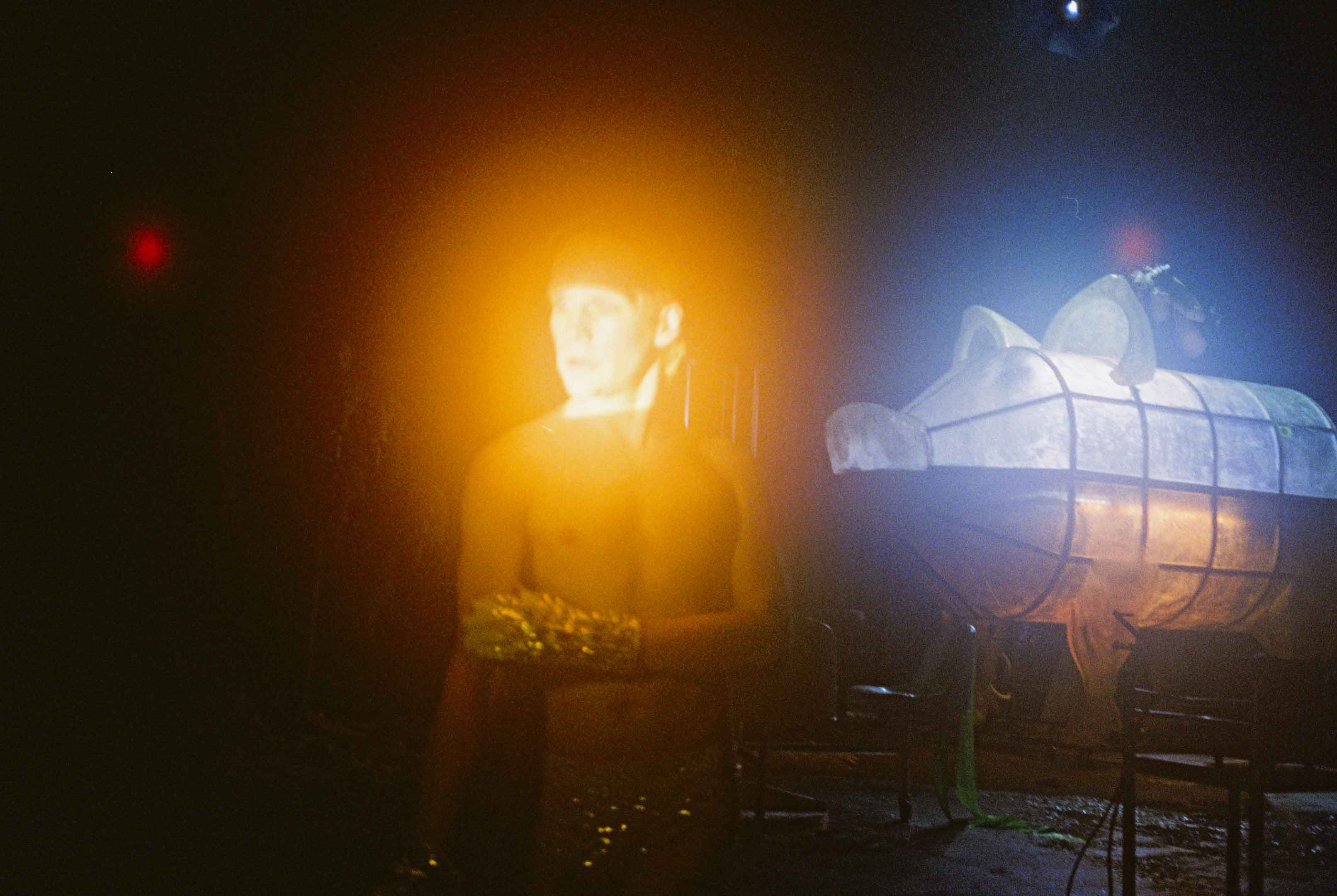
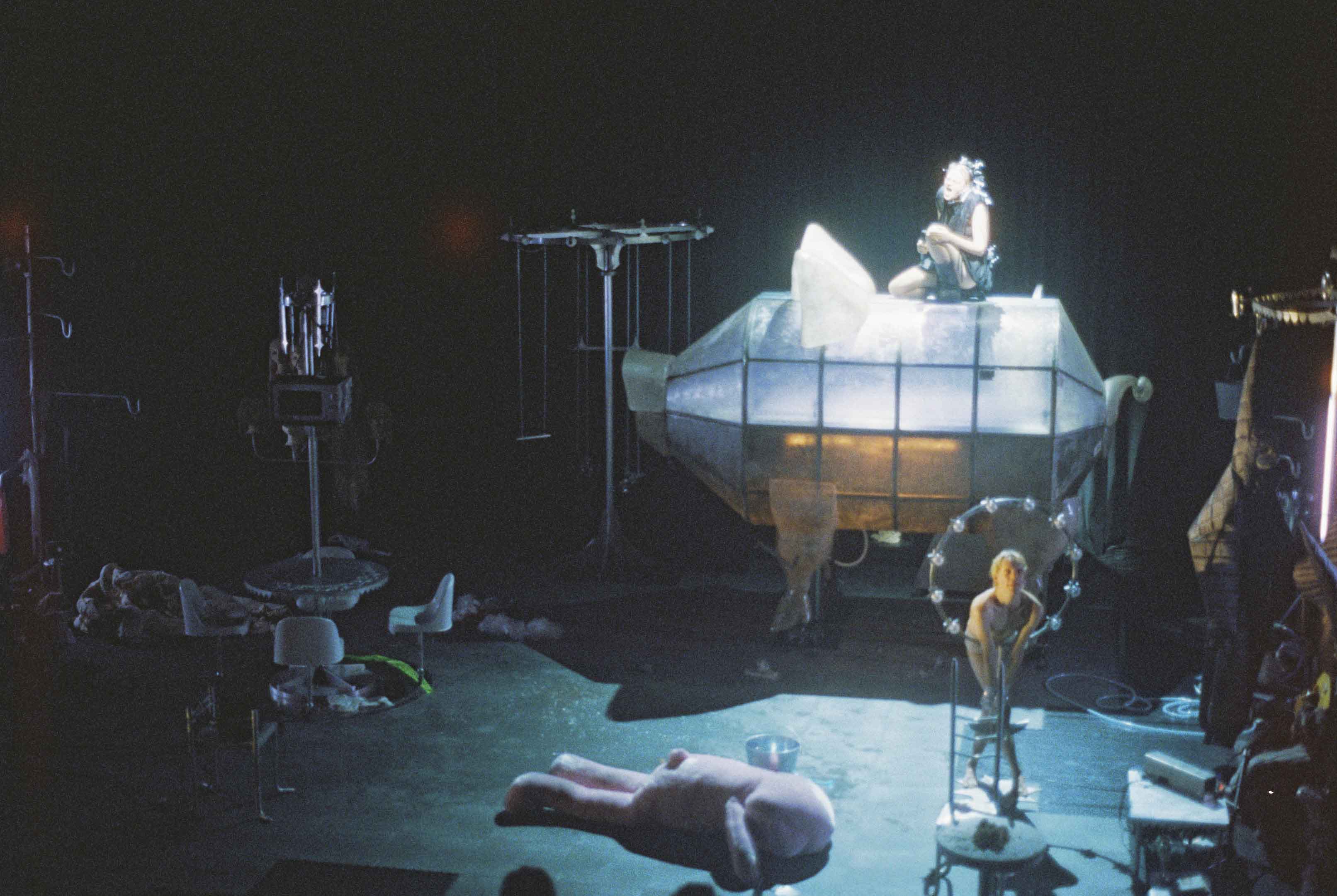
With SCHWEINEREI, theatre maker Lieselot Siddiki stages a grotesque, sensual, musical trip about innocence, excess, and the temptation of ruin. A baroque bacchanal on the edge of the abyss: a final feast before the slaughterhouse.
Welcome to the palace. The mirrors are cracked, the powder boxes empty. Pigs strut around with silk ribbons wrapped around their bellies. Marie Antoinette wears a wig stuffed with cigarettes. Michael Jackson moonwalks in a Mozart costume across the marble floor. The music is divine. Outside, the crowd is pounding at the gates. Everything is ready for the party. Or the execution.
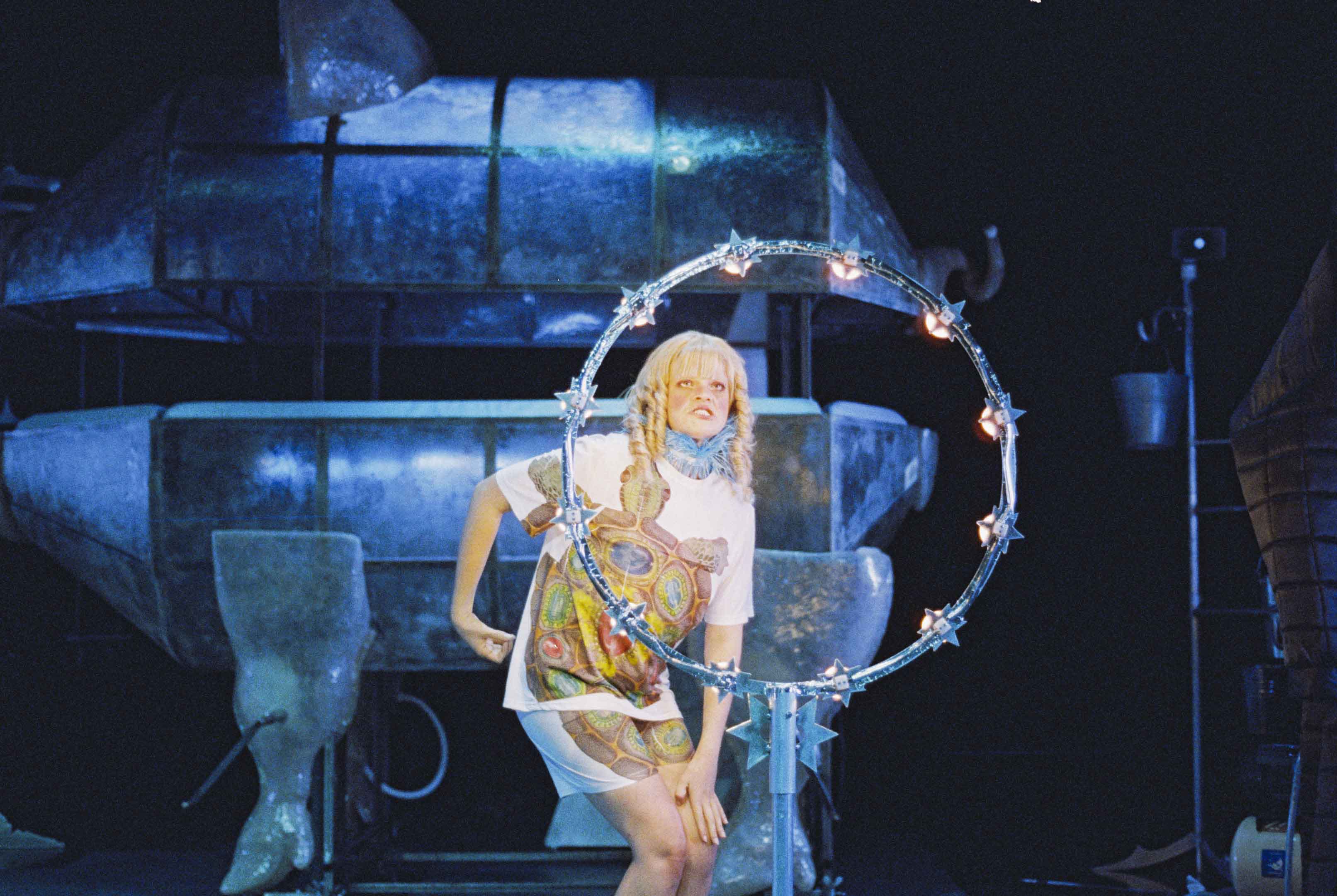
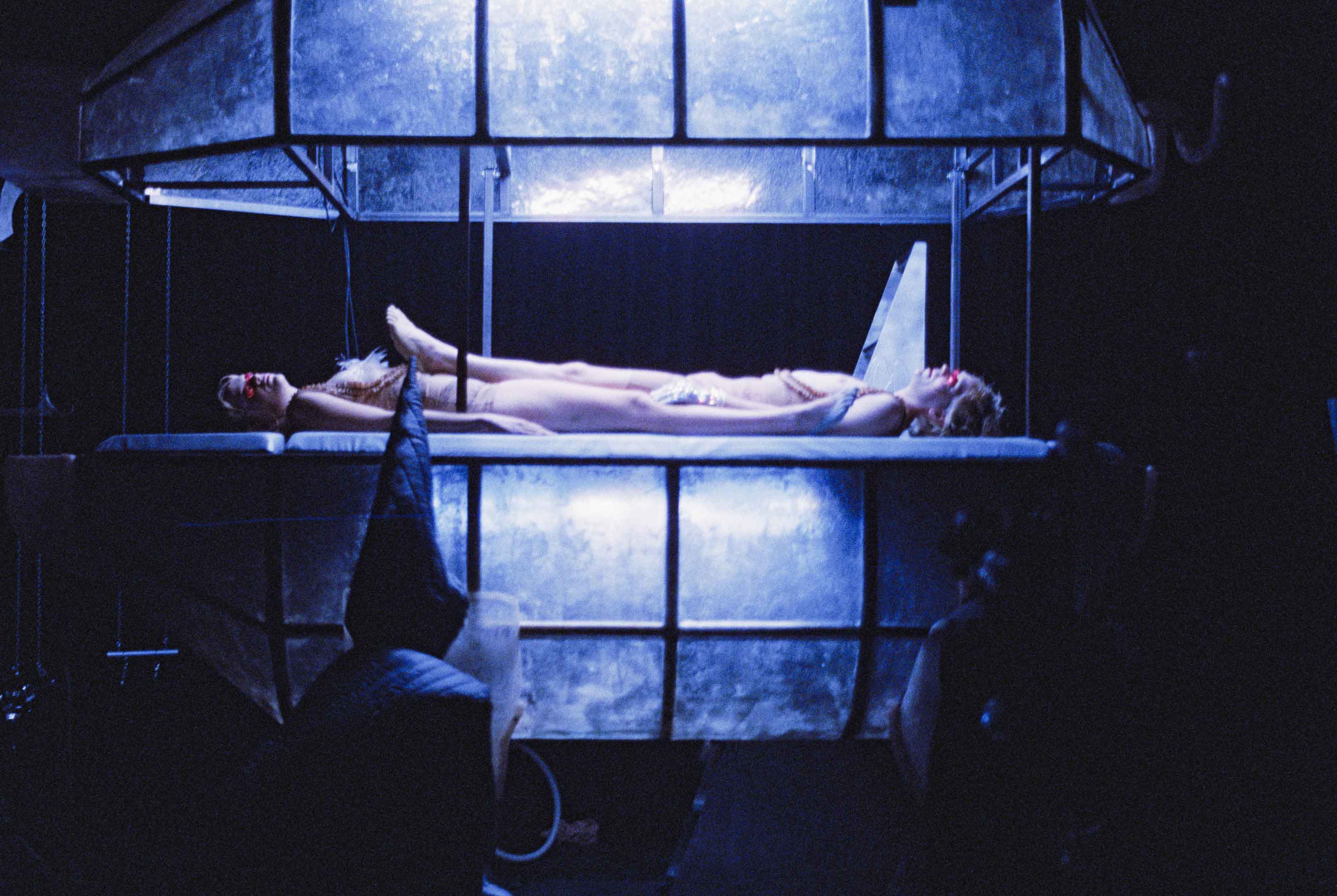
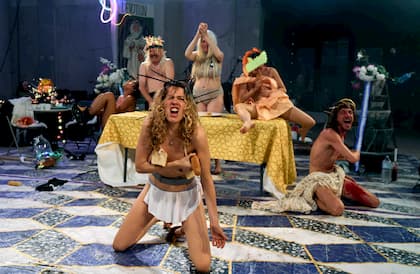
With SCHWEINEREI, theatre maker Lieselot Siddiki stages a grotesque, sensual, musical trip about innocence, excess, and the temptation of ruin. A baroque bacchanal on the edge of the abyss: a final feast before the slaughterhouse. She conjures three iconic figures – Marie Antoinette, Michael Jackson, and Mozart – as eternal children: prodigies of their time, but also freaks, targets of mockery, lust, and rage. Their paradises (Versailles, Neverland, …) are no havens of innocence but meticulously staged cages. They are trapped inside a sick fairytale.
Mozart’s piano sonatas beat at the heart of the performance. His sounds – playful, childlike, brilliant, unearthly – drive the spectacle as both temptation and warning. The music pulls us into a dream state while the tension underneath keeps rising. Mozart’s harmonies may seem innocent, but they guide the ritual like a fever dream that grows ever more bitter. His music both illuminates and numbs, consoles and conceals. In this universe, Marie Antoinette is reimagined: not only as a symbol of decadence, but as a female body turned into a monster for centuries. She was mocked for being too empty, too beautiful, too sexual, too cruel, too innocent – all at once. She is both princess and projection screen: a victim of misogyny and spectacle politics.
In SCHWEINEREI, her body is not restored but reclaimed: as weapon, as myth, as flesh. Inspired by the grotesque world of Rabelais, the carnivalesque thinking of Bakhtin, and the uncanny aesthetics of artists like Mike Kelley and Paul McCarthy, Siddiki constructs a universe where the childish and the monstrous melt into one another. A courtly game with porcelain flutes up the ass, a Garden of Eden filled with toys, pigs, and clown noses. Beneath the thick layer of glaze, something darker is bubbling. The revolution is near.
SCHWEINEREI is a performance about the end of a world order – and what comes after. A mirror for our time, where decadence and revolution embrace each other. Because what happens when excess becomes unstoppable? When paradise reveals its rot from within? History teaches us this: where decadence flourishes, revolution is already knocking at the door.
SCHWEINEREI offers no comfort. No lesson. No moral. It is a warning disguised as spectacle. A ritual. A purge. A fever dream.
The table is set. The flesh is warm. The music is divine. Outside, the masses surge.
With SCHWEINEREI, theatre maker Lieselot Siddiki stages a grotesque, sensual, musical trip about innocence, excess, and the temptation of ruin. A baroque bacchanal on the edge of the abyss: a final feast before the slaughterhouse. She conjures three iconic figures – Marie Antoinette, Michael Jackson, and Mozart – as eternal children: prodigies of their time, but also freaks, targets of mockery, lust, and rage. Their paradises (Versailles, Neverland, …) are no havens of innocence but meticulously staged cages. They are trapped inside a sick fairytale.
Mozart’s piano sonatas beat at the heart of the performance. His sounds – playful, childlike, brilliant, unearthly – drive the spectacle as both temptation and warning. The music pulls us into a dream state while the tension underneath keeps rising. Mozart’s harmonies may seem innocent, but they guide the ritual like a fever dream that grows ever more bitter. His music both illuminates and numbs, consoles and conceals. In this universe, Marie Antoinette is reimagined: not only as a symbol of decadence, but as a female body turned into a monster for centuries. She was mocked for being too empty, too beautiful, too sexual, too cruel, too innocent – all at once. She is both princess and projection screen: a victim of misogyny and spectacle politics.
In SCHWEINEREI, her body is not restored but reclaimed: as weapon, as myth, as flesh. Inspired by the grotesque world of Rabelais, the carnivalesque thinking of Bakhtin, and the uncanny aesthetics of artists like Mike Kelley and Paul McCarthy, Siddiki constructs a universe where the childish and the monstrous melt into one another. A courtly game with porcelain flutes up the ass, a Garden of Eden filled with toys, pigs, and clown noses. Beneath the thick layer of glaze, something darker is bubbling. The revolution is near.
SCHWEINEREI is a performance about the end of a world order – and what comes after. A mirror for our time, where decadence and revolution embrace each other. Because what happens when excess becomes unstoppable? When paradise reveals its rot from within? History teaches us this: where decadence flourishes, revolution is already knocking at the door.
SCHWEINEREI offers no comfort. No lesson. No moral. It is a warning disguised as spectacle. A ritual. A purge. A fever dream.
The table is set. The flesh is warm. The music is divine. Outside, the masses surge.
director
- Lieselot Siddiki
design
- Lieselot Siddiki
performance
- Lucas Van der Vegt
- Lucie Plasschaert
- Lieselot Siddiki
- e.a.
muziekcompositie
- Wolfgang Amadeus Mozart
- Lucas Van der Vegt
- Oscar Claus
dramaturgy
- Dries Douibi
Geluidsontwerp en - techniek
- Oscar Claus
costumes
- Aidan Abnet
scenography
- Eva Demulder
light design
- Max Adams
production
- LOUD muziektheater
coproduction
- Toneelhuis
- VIERNULVIER
- KVS
- detheatermaker
- De Brakke Grond
- Kunstenwerkplaats
with the support of
- de tax shelter maatregel van de Belgische federlae overheid
- via Flanders Tax Shelter