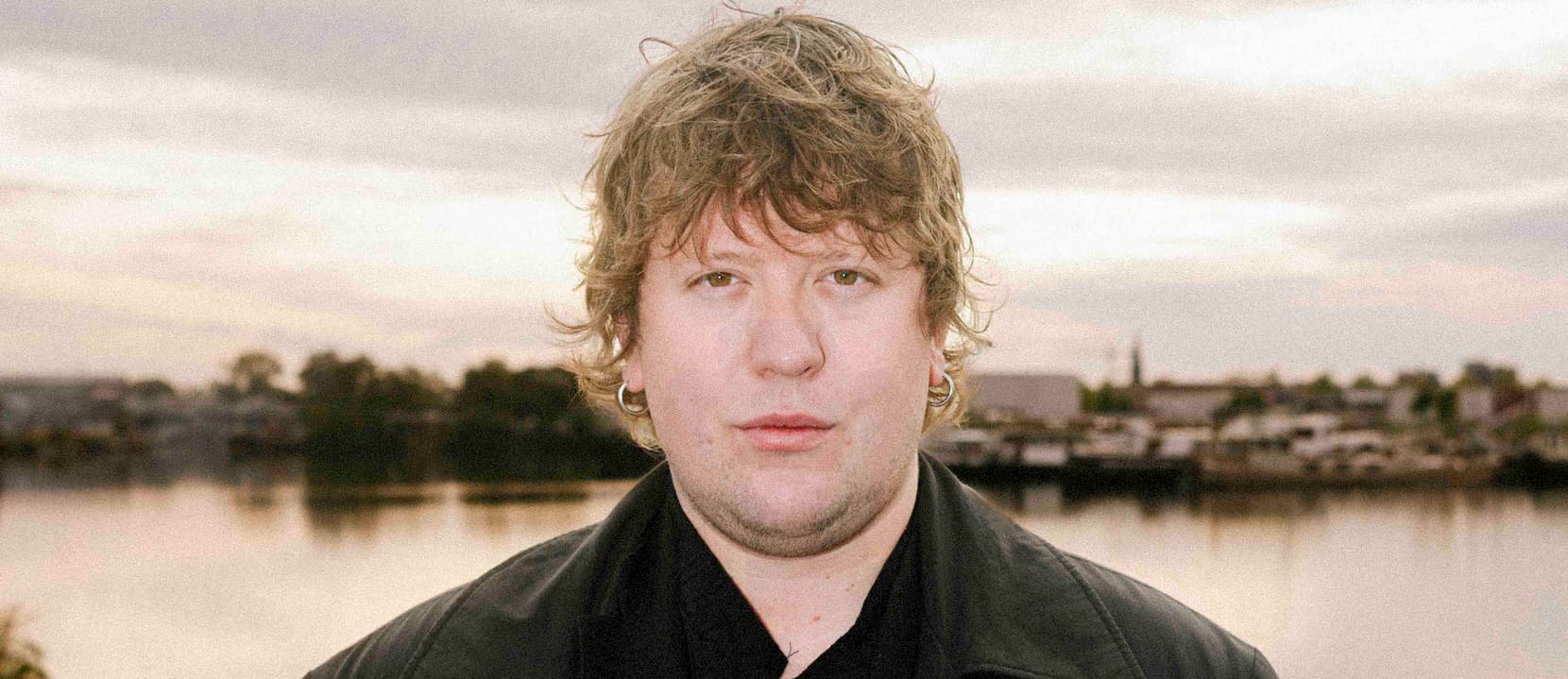
Benjamin Abel Meirhaeghe (b.1995) is a performer, self-educated countertenor, and a director who works with theatre, music, dance and visual art. His practice challenges various performing arts traditions, often opera and ballet, and seeks new forms of collective expression within them.
In this ongoing search, the future and the past meet under temporary, open-ended conditions. People sing Monteverdi around a prehistoric fire, or a group of aliens dig up repertoire from the past. Meirhaeghe’s shows are retro-futuristic happenings in which utopia does not remain an unattainable dream but manifests itself in the here and now, intimate and vulnerable, in a large-scale theatrical space.
For Meirhaeghe, theatre is an echo chamber, a tool for time travel. The performer appears within it as an archaeologist from the future, who unearths new meaning in the rubble of the past. His work oscillates between nostalgia and a longing for the future, and questions our relationship with heritage and the canon. What remains, and what disappears?
Meirhaeghe’s shows unfold as contemporary rituals, collective situations in which bodies, voices and images generate new symbols. Just as the cave paintings in Lascaux were an early attempt to understand and depict the world, Meirhaeghe creates symbols for people today, based on the belief that our society is in need of a concerted sense of meaning. In these temporary situations, performers and audience jointly develop a different way of communicating. They step into a possible world where they practice a future: not by describing it, but by embodying it together.
Hierarchies between disciplines and performers are not valid here. Singers dance, dancers sing; technical and aesthetic codes are taken apart. By working with performers from different backgrounds and disciplines, he questions norms about virtuosity, training and intimacy. His own position as a self-taught countertenor is part of this artistic and political stance.
Ultimately, Meirhaeghe’s work is characterized by a strong visual signature, in which lighting, scenography, visual art, smoke and physical objects all function as full-fledged performers. His shows are like living installations: sensory, layered and focused on reimagining what theatre can be. Anyone who encounters his work or Meirhaeghe himself will recognize this same dynamic: a continual back-and-forth between the grandiose and the gentle.
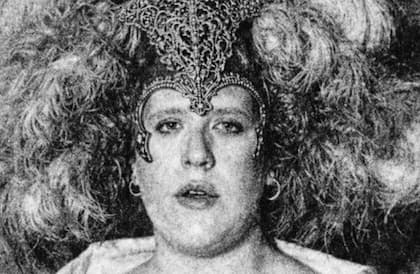
With Opera Ballet Vlaanderen in 2020, he created A Revue, a retro-futuristic, queer cabaret in which aliens unearth opera's lost artefacts. This visually stunning show was selected for the TheatreFestival 2021.
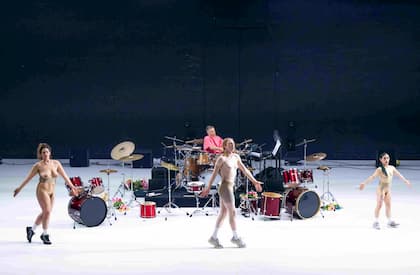
In 2021 there was also the ritualistic concert Spectacles, a performance and a record album combining relentless beats, smouldering love songs, Meirhaeghe's delicate countertenor and jazz and gospel influences. Working with producer Laurens Mariën and dancer Hanako Hayakawa, he turned the concert into a theatrical experience.
In early 2022, Madrigals premiered. Here, Meirhaeghe worked Claudio Monteverdi's effervescent vocal works about war and love, Madrigali guerrieri et amorosi, into a cry for freedom fuelled by militancy and passion, and mixed them with Jesse Kanda's experimental pop.
In 2022, Benjamin Abel Meirhaeghe was appointed co-artistic director of Toneelhuis, together with Lisaboa Houbrechts, Görges Ocloo, FC Bergman and Olympique Dramatique.
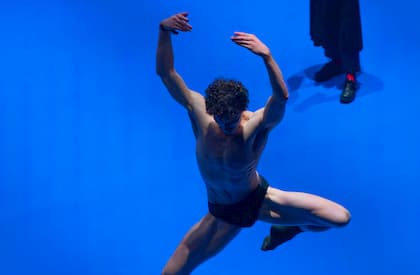
His first creation for Toneelhuis was Ode to a Love Lost (2023). This production, based on Meirhaeghe's own personal love story, is set in the deep crater of a heart.
In the fall of 2023, invited by the Volksbϋhne am Rosa-Luxemburg-Platz to make his own version of the creation story, Meirhaeghe came up with the overwhelming Death Drive – Everything Everyone Ever Did.
At Toneelhuis in the beginning of 2024, he made Shelly Shonk Fiffit, featuring a replica of the James Webb space telescope, the music of Caterina Barbieri and picturesque movements.
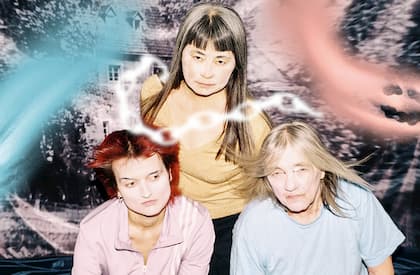
Benjamin Abel Meirhaeghe is part of a trio called ‘Isabelle Lewis’, along with composer and producer Valgeir Sigurdsson and violinist Elisabeth Klinck. In October 2024, they brought out their first album, Greetings.
Also in 2024, Johan Simons invited Meirhaeghe to work as a guest director at
Schauspielhaus Bochum. Give Up die alten Geister! was an encounter between performers of different generations and backgrounds, revolving around Mozart’s Requiem.
At Toneelhuis in the spring of 2025, Benjamin Abel Meirhaeghe created Mantike, an evocative monologue written by Louise Van den Eede and performed by Marjan De Schutter, about the art of prophecy in the light of an approaching apocalypse.
In the 2025-2026 season, no less than three new premieres were on the programme, each based on a classical piece of music. Chapters of Celebration, a vibrant music theatre show made by Meirhaeghe in collaboration with Wouter Deltour at DE SINGEL, takes one of the oldest themes in European music as its central motif: La Folia.
With a rite of spring, set to new, stirring music by Lander Gyselinck, Meirhaeghe paid tribute to the ultra-classic Le Sacre du printemps while turning it into a radical account of women’s sacrifices today.
The final show of the season was to have been a remake of Give Up, Old Ghosts!, with a leading role for Mozart’s unfinished Requiem and dance by Fumiyo Ikeda. The premiere had to be postponed, due to an injury.
In Airs to Ash, which will premiere in the summer of 2027, Benjamin Abel Meirhaeghe is subjecting his beloved art form of opera to a strict scrutiny. After more than 400 years, what is still relevant about opera? Is the genre still viable? Airs to Ash brings three countertenors and an equal number of performers together in a collage of scenes about the voice.